Cleaning
Hands
The Vertical Filter:
Complete Curtain Care Guide
Curtains are the lungs of your home, trapping airborne dust, pollen, and pollutants entering through windows. Learn how to maintain them without shrinking delicate fabrics or damaging pleats.
1. More Than Just Decor: The Health Impact
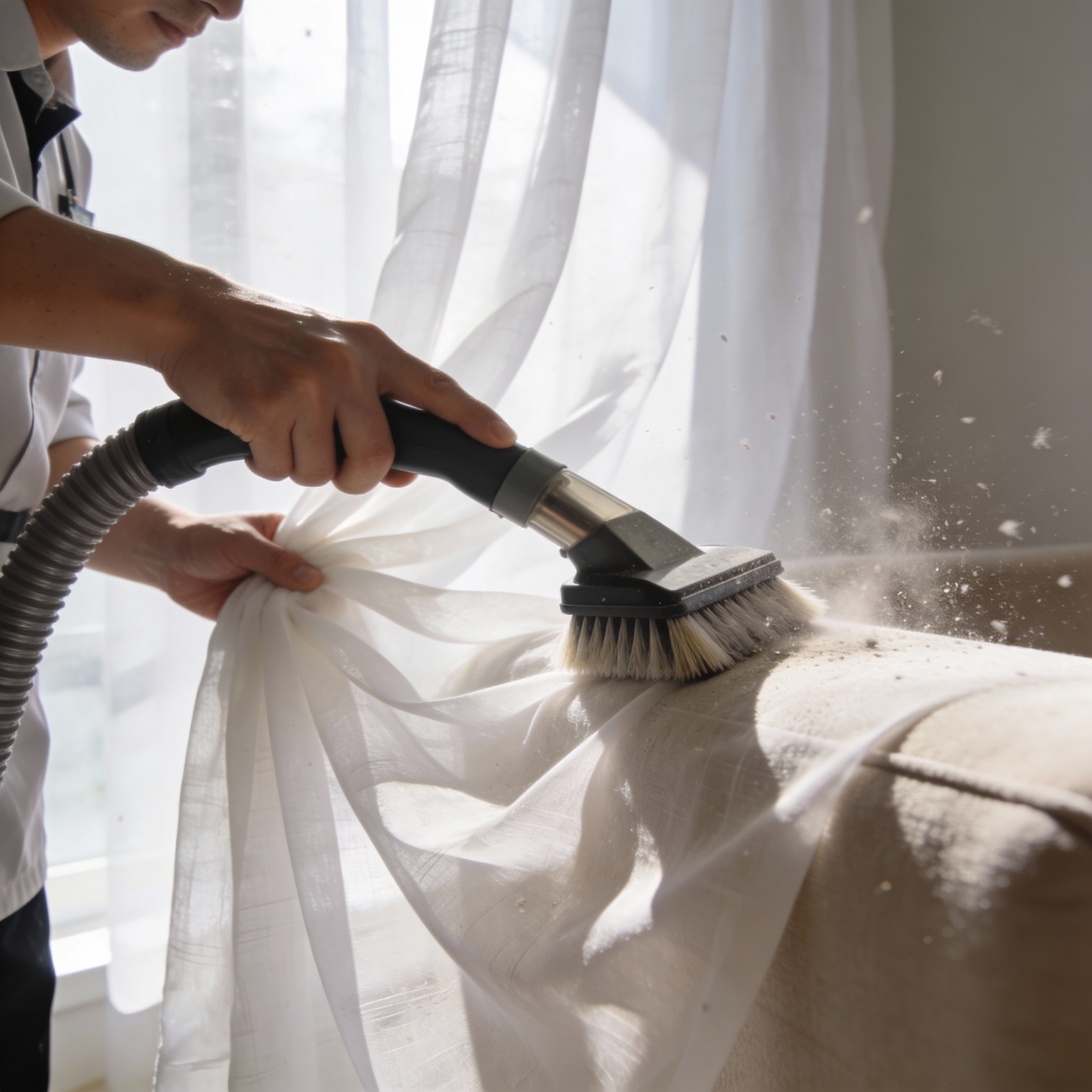
While often treated purely as aesthetic elements, curtains act as significant passive air filters. In suburbs with high pollen counts or heavy traffic, a standard set of floor-to-ceiling drapes can accumulate up to 3kg of particulate matter over a two-year period.
The unique challenge in Australia, particularly in regions with fluctuating temperatures like Blackburn, is “Window Sweating.” Condensation forms on glass overnight and transfers to the curtain lining, creating the perfect dark, damp environment for Stachybotrys chartarum (Black Mold).
Contaminant Profile
Breakdown of biological and particulate matter found in uncleaned curtains (3-year sample).
- 45% Dust & Silica Traffic/Construction
- 25% Mold Spores Humidity/Condensation
- 20% Allergens Pollen/Pet Dander
- 10% Odor Molecules Cooking/Smoke
2. The Risk of Shrinkage: Why DIY Fails
Unlike clothing, curtain fabrics (Rubber-backed blockouts, Linens, and Velvets) are rarely pre-shrunk during manufacturing. Introducing water via a standard washing machine can cause shrinkage rates of up to 10%. For a standard 2.2m drop, this means losing 22cm of length—ruining the look of the room.
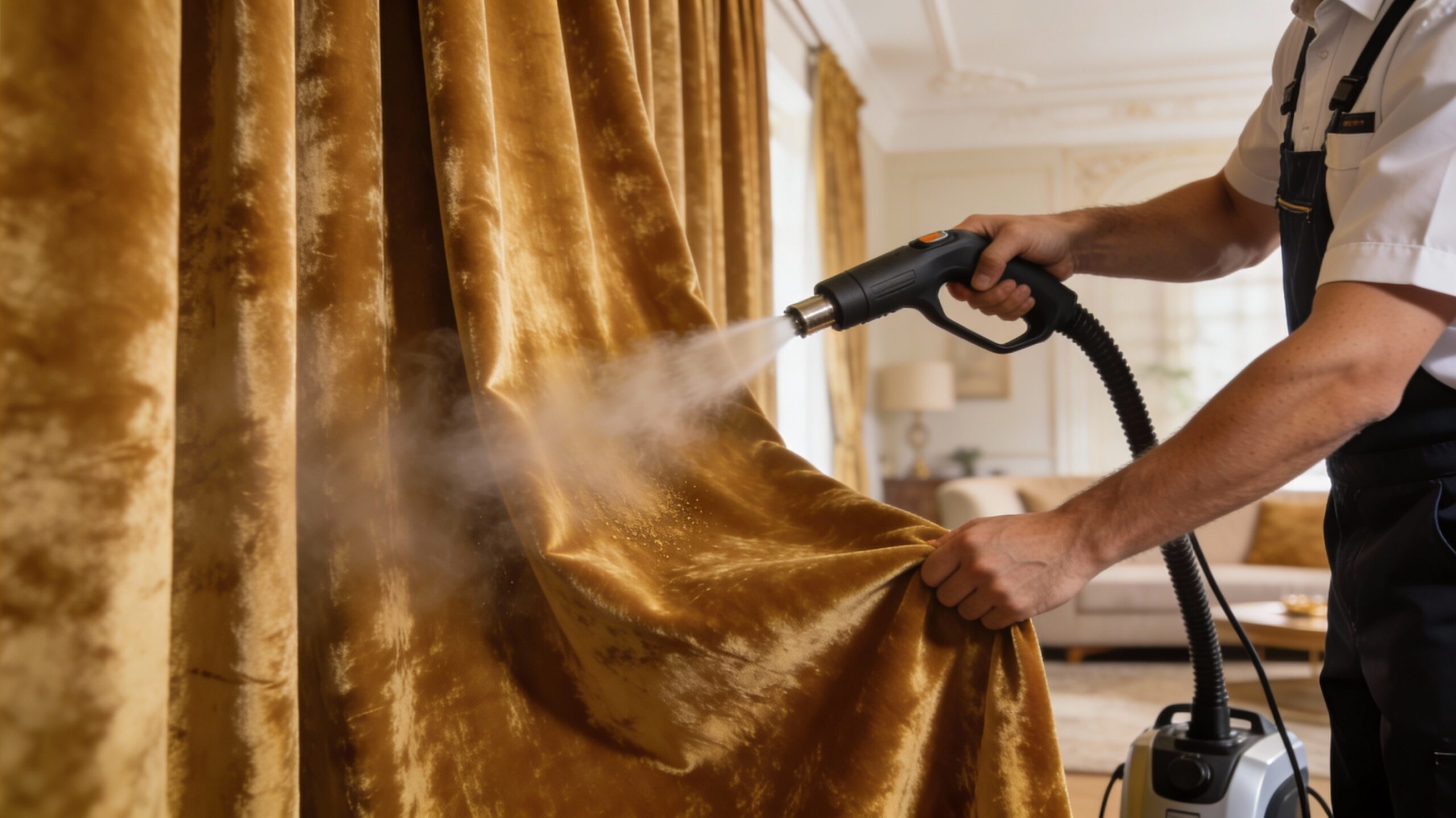
Professional cleaning utilizes solvent-based dry cleaning or specialized low-moisture steam injection that cleans the fiber without penetrating the core, preserving the structural integrity and the rubber backing.
Professional Assessment Required?
If you spot black speckling along the hem or lining, or if your drapes are rubber-backed, DO NOT attempt to wash them yourself. The backing will peel and stick to itself.
For residents dealing with delicate fabrics or severe mold issues in the area, we refer to the Curtain Cleaning Blackburn specialists. They use on-site extraction tanks that clean curtains while they hang, preventing creasing and shrinkage.
3. Cleaning Protocols by Material
Different weaves require vastly different chemical approaches. Identify your fabric before taking action.
Rubber-Backed Blockout
Highly sensitive to heat and tumbling.
Natural Linen/Cotton
Prone to “Cellulosic Browning” (water stains).
Velvet/Chenille
Pile distortion risk (crushing).
The On-Site Cleaning Process
Pre-Inspection & Test
Identifying fabric composition (burn test if label is missing) and testing colorfastness in an inconspicuous area.
HEPA Vacuuming
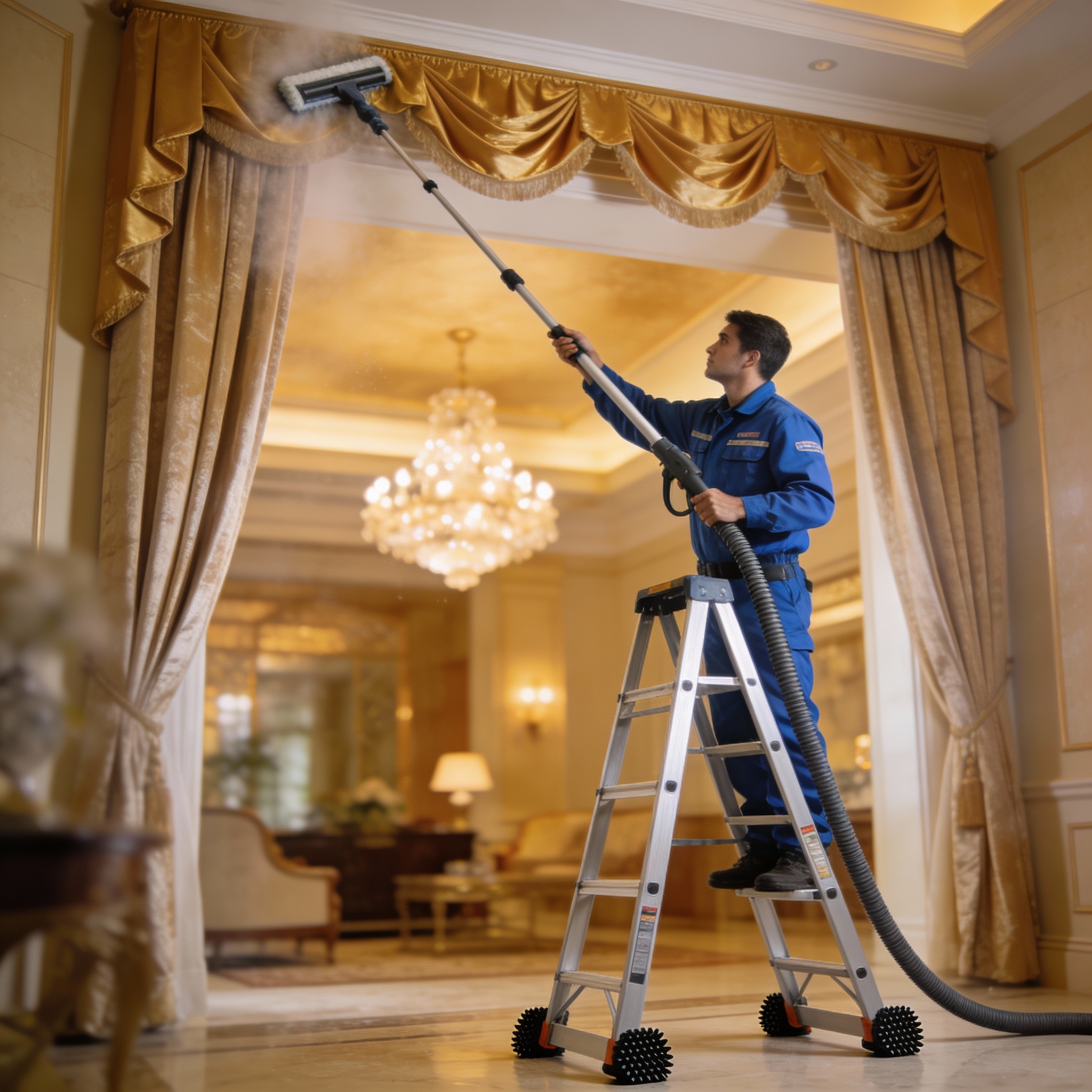
Removing dry soil, spider webs, and dust accumulation from pleats and headers.
Microsplitting Pre-Spray
Application of a non-detergent solution that shatters the bond between dirt and fiber without creating suds.
Steam Extraction & Drying
Simultaneous injection and extraction to remove soil. Air movers are used to ensure fabrics are dry within 2 hours.
Breathe Easier at Home
Don’t let your window furnishings become a reservoir for illness-causing mold and dust. Regular professional maintenance extends the life of expensive drapery and improves indoor air quality immediately.
Trusted Local Partner:
Book Blackburn Curtain Services